
Protecting construction sites, parking lots, warehouses, and commercial properties has become increasingly challenging. Businesses must manage risks such as equipment theft, vandalism, unauthorized entry, and property damage while keeping security expenses under control.
Traditional security systems can be difficult to install in temporary locations or properties without established electrical infrastructure. Hiring on-site security guards may also create significant ongoing expenses, particularly when protection is needed around the clock.
Mobile surveillance trailers offer a flexible alternative, combining elevated security cameras, portable deployment, remote connectivity, and optional active deterrence capabilities in one movable security platform.
For businesses seeking adaptable property protection, mobile surveillance technology can help strengthen visibility, identify suspicious activity, and support faster security responses.
What Are Mobile Surveillance Trailers?
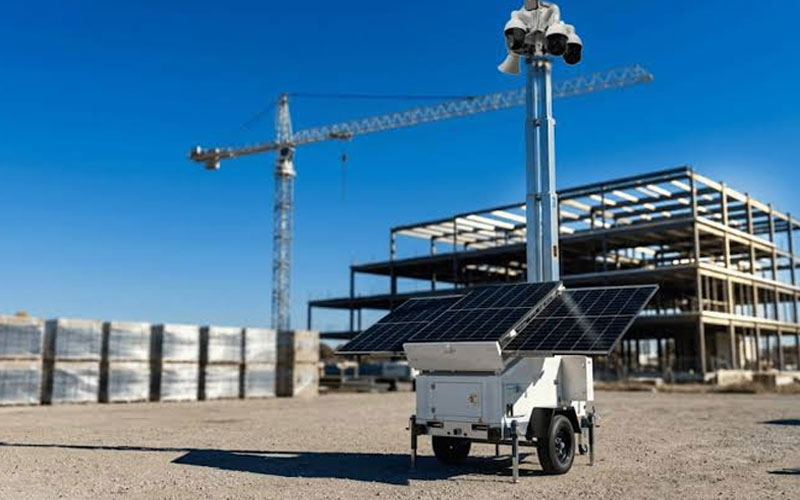
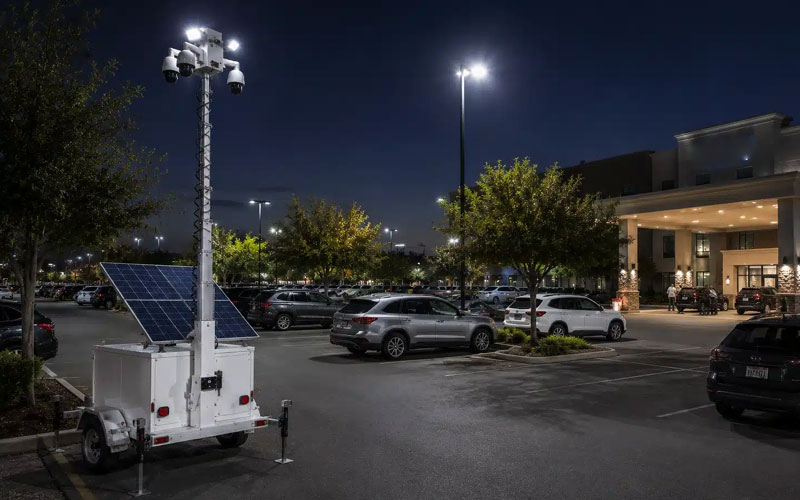
Mobile surveillance trailers are portable security units designed to monitor outdoor environments without requiring permanent camera infrastructure.
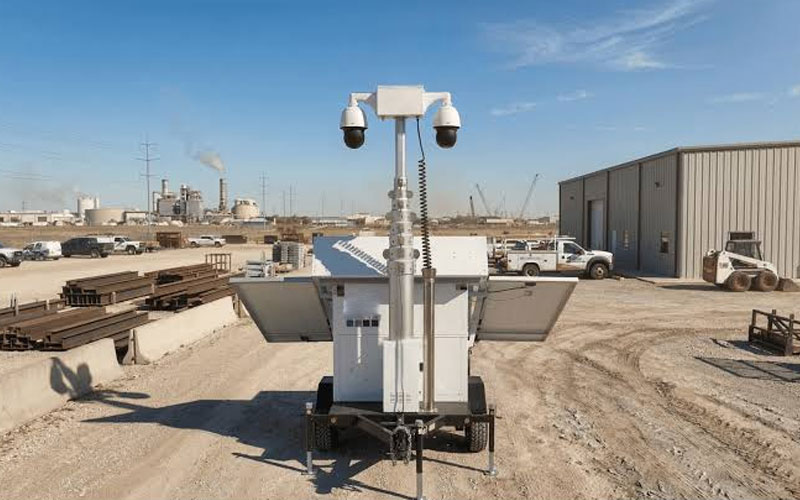
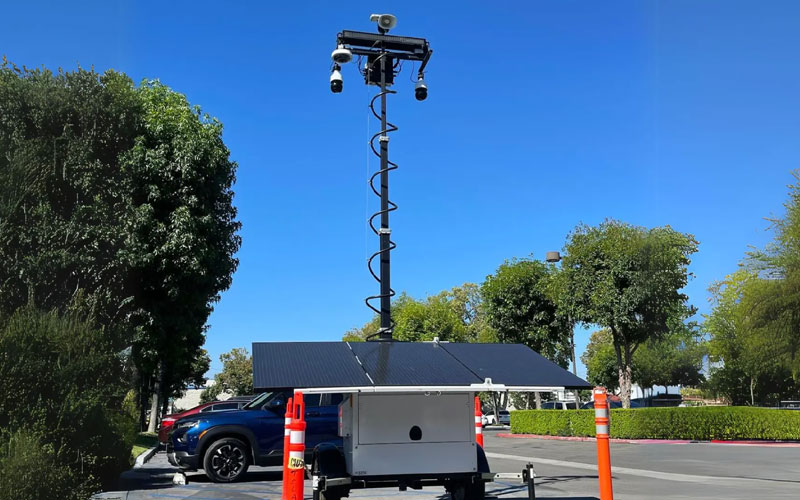
These systems typically feature a trailer-mounted mast equipped with surveillance cameras, communications equipment, and an independent or externally connected power source.
Depending on the equipment configuration, a mobile surveillance trailer may include:
-
High-definition security cameras with wide-area coverage
-
Elevated camera masts for improved visibility
-
Solar panels and battery storage
-
Cellular or wireless communication technology
-
Motion detection and video analytics
-
Remote access to live and recorded footage
-
Audible warnings, lights, or other deterrence equipment
-
Integration with professional live video monitoring services
Unlike fixed surveillance systems, mobile security trailers can be relocated when project requirements change.
This flexibility makes them particularly useful for construction projects, temporary storage facilities, outdoor commercial properties, and locations requiring short-term security coverage.
Why Construction Sites Need Mobile Surveillance
Construction sites frequently contain valuable equipment, building materials, tools, and machinery. These assets may remain exposed after workers leave for the day.
Temporary fencing and locked gates can help establish boundaries, but they cannot independently identify every attempted intrusion.
1. Protection Against Equipment and Material Theft
Construction equipment, copper wiring, tools, and building supplies can be attractive targets for thieves.
A mobile surveillance trailer can provide visible camera coverage around equipment storage areas, access points, and other vulnerable locations.
When connected to an appropriate monitoring service, detected activity may be reviewed by trained operators who can follow established response procedures.
The presence of a highly visible surveillance unit may also discourage opportunistic criminal activity.
2. Monitoring After Business Hours
Construction projects often operate during predictable working hours, leaving properties less active overnight, on weekends, and during holidays.
Remote surveillance allows site managers or authorized monitoring personnel to maintain visibility during these periods.
Features such as motion detection, scheduled alerts, and recorded footage can support incident identification and investigation.
3. Flexible Security During Different Project Phases
Security requirements change as construction progresses.
During site preparation, monitoring may focus on entrances and equipment storage. Later, attention may shift to completed structures, material staging areas, or newly opened access routes.
Portable surveillance trailers can be repositioned to support changing site layouts without rebuilding an entire fixed camera network.
4. Supporting Incident Documentation
Recorded video can help property managers understand when an incident occurred, identify relevant activity, and provide information to authorized investigators.
However, video quality, camera placement, lighting, recording retention, and legal requirements all affect how useful footage may be.
How Mobile Surveillance Trailers Work
A typical mobile surveillance system combines several technologies.
High-Definition Camera Coverage
Elevated cameras can monitor large outdoor areas while reducing some of the visibility limitations associated with ground-level installations.
Camera capabilities vary by system and may include optical zoom, infrared night vision, or pan-tilt-zoom functionality.
Independent Power Options
Some mobile surveillance trailers use solar panels and rechargeable batteries, reducing dependence on permanent electrical connections.
Actual operating time depends on battery capacity, sunlight, weather, equipment consumption, and system configuration.
Businesses should confirm the power requirements of a particular trailer before deployment.
Remote Connectivity
Cellular or wireless networking can allow authorized personnel to view footage and receive notifications remotely.
Connectivity performance depends on network coverage, signal quality, bandwidth, and equipment configuration.
Active Security Monitoring
A surveillance trailer becomes more proactive when integrated with a monitoring service.
Depending on the service agreement, trained operators may assess alerts, issue audio warnings, contact designated representatives, or escalate incidents to appropriate responders.
This process can provide more actionable security oversight than a camera system that only records footage for later review.
Where Mobile Surveillance Trailers Are Most Effective
Construction Sites
Monitor entrances, machinery, material storage areas, and temporary structures.
Car Dealerships
Provide additional visibility over outdoor vehicle inventory, particularly after closing.
Parking Lots
Observe entrances, vehicle movement, pedestrian areas, and locations with limited staff presence.
Warehouses and Distribution Centers
Support monitoring around loading docks, truck parking areas, outdoor inventory, and perimeter access points.
Vacant Commercial Properties
Maintain surveillance at buildings awaiting tenants, renovation, or redevelopment.
Temporary Events
Provide movable camera coverage for event entrances, equipment areas, and other temporary operational zones.
Mobile Surveillance Trailers vs. Traditional Security Cameras
Both portable and fixed surveillance systems have important advantages.
Mobile surveillance trailers are generally better suited to locations requiring temporary deployment, relocation, or surveillance without extensive permanent infrastructure.
Fixed security cameras are often preferable for established buildings where permanent wiring, network infrastructure, and long-term camera placement are practical.
A business should consider the expected duration of use, property layout, available power, monitoring requirements, and total ownership or rental costs.
For some properties, a combination of mobile and fixed cameras may provide the most appropriate coverage.
How Much Does a Mobile Surveillance Trailer Cost?
Mobile surveillance trailer pricing depends on several factors:
-
Rental versus purchase
-
Number and type of cameras
-
Power and battery configuration
-
Monitoring service requirements
-
Cellular connectivity and data usage
-
Installation and transportation
-
Contract duration
-
Maintenance and technical support
A lower upfront price does not necessarily mean a lower total security cost.
Businesses should compare equipment, monitoring, deployment, and ongoing service expenses over the expected project duration.
Requesting a customized quote is often more useful than comparing equipment rental prices alone.
How to Choose the Right Mobile Surveillance System
Before selecting a system, identify the property’s most important security risks.
Consider the size of the area, visibility at night, access points, equipment value, and availability of power or cellular connectivity.
Ask potential providers whether their systems support live monitoring, how incidents are escalated, what footage retention options are available, and whether technical support is included.
Also confirm whether the equipment can be relocated as the property’s requirements change.
Frequently Asked Questions
Can mobile surveillance trailers operate without electricity?
Some systems use solar power and battery storage. Their ability to operate independently depends on the equipment configuration, energy consumption, and environmental conditions.
Are mobile surveillance trailers suitable for temporary construction projects?
Yes. Their portable design makes them particularly useful for temporary and changing construction environments.
Can mobile security trailers record at night?
Many systems support nighttime surveillance through infrared cameras, low-light technology, or supplemental illumination. Actual capabilities depend on the installed cameras.
Do mobile surveillance trailers replace security guards?
They may reduce the need for certain routine observation duties, but they cannot physically intervene. Some properties still require guards, patrols, or other on-site security measures.
Can a surveillance trailer be moved to another location?
Yes, provided the equipment is designed for relocation and the new site meets deployment, power, connectivity, and safety requirements.
Protect Your Property With Prime View Technologies
Every commercial property faces different security challenges. A construction site may need temporary perimeter monitoring, while a dealership may require consistent overnight coverage of valuable vehicle inventory.
Prime View Technologies provides surveillance solutions for businesses evaluating flexible security coverage, including mobile surveillance trailers and remote monitoring options.
Explore the available solutions and discuss your property’s specific security needs with the Prime View Technologies team.